
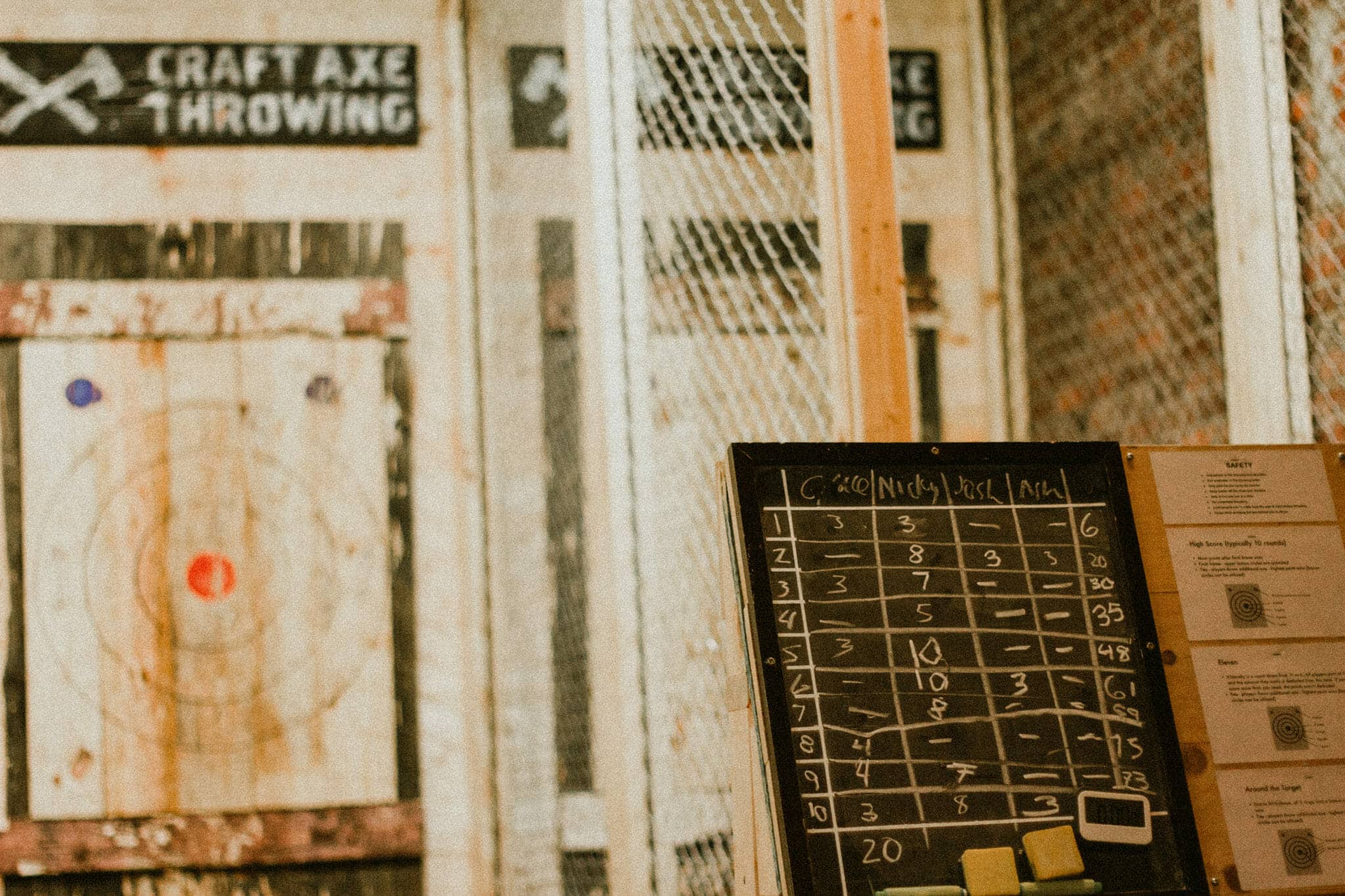
Yes - axe throwing is safe when you do it at a supervised venue. At Craft Axe Throwing, every session starts with a safety briefing from a trained coach, throwing happens inside lanes fully enclosed by mesh and wood, and only one thrower steps up to the line at a time. We’ve hosted hundreds of thousands of throws across our ten venues without an injury.
The key safety layers, at a glance:
- A coach at every lane - trained staff teach grip, stance, and release, then keep watching for the whole session.
- Fully enclosed lanes - mesh and wood barriers separate each throwing lane from spectators and neighboring lanes.
- One thrower at a time - everyone else stays behind the throwing line until the axe has landed.
- A mandatory safety briefing - no one throws before the walkthrough.
- Purpose-built equipment - small one-to-two-pound hatchets thrown at a wooden target from 12 to 15 feet, not full-size felling axes.
Why is axe throwing safe at a venue?
The activity sounds risky because “axe,” but the setup removes the risks people imagine. The axe travels one direction - away from you, down an enclosed lane, into a soft wooden target. Spectators stand behind the throwing line, 12 to 15 feet from the target, so a dropped or bounced axe lands nowhere near them. And unlike backyard throwing, a commercial venue adds the ingredient that matters most: supervision. Our coaches run the safety briefing, demonstrate the throw, and stay with your group for the entire session - it’s included in every session we sell, not an upsell.
That structure is why the honest answer to “is axe throwing dangerous?” is no - at a supervised venue. The same activity freelanced in a garage with a hardware-store hatchet is a different story. The venue is the safety system.
What are the safety rules at an axe throwing venue?
Every group at Craft Axe Throwing gets the safety walkthrough before touching an axe. The core rules our coaches teach:
- Closed-toe shoes, always. This one is required, no exceptions - it protects your feet if an axe drops at the line.
- One thrower per target at a time. Everyone else waits behind the throwing line.
- Throw only when your lane is clear and the thrower beside you has finished, if you share a cage.
- Retrieve together. Walk up for your axe only when all axes in the lane have been thrown and the lane is clear.
- Never try to catch a falling axe. If it doesn’t stick, let it hit the floor - axes drop at the target, not back at you.
- Carry the axe blade-down at your side between the rack and the line.
- Listen to your coach. They can pause any lane, any time.
None of this slows the fun down. The briefing takes a few minutes, and then you’re throwing - most beginners stick an axe within the first 15 minutes. If you want the technique itself, we broke it down step by step in our beginner’s guide to throwing an axe.
What do the official league rules say?
Competitive axe throwing is governed by the World Axe Throwing League (WATL) rulebook, and its safety requirements mirror what good venues already do:
| WATL rule | What it means |
|---|---|
| Enclosed lanes | ”Fences or walls block the area for safety” - only competitors and judges are allowed inside a lane |
| Fault line | Throwers release from behind a marked line - 12 feet for standard hatchets, 15 feet for big axes |
| Blade away | Overhead throws must be made with the blade facing away from the competitor |
| Axe limits | Competition axes max out at 3 pounds and a 19-inch handle - small, controllable tools |
| Unsafe throwing | ”Clear and intentional unsafe throwing will result in disqualification” |
A sport doesn’t get sanctioned leagues, standardized lane specs, and written disqualification rules unless it can be run safely night after night. Several of our venues host WATL-sanctioned leagues on those exact rules - eight-week seasons, all skill levels.
Can you drink alcohol while axe throwing?
At many venues, yes - in moderation and under supervision. Every Craft Axe Throwing venue has an on-site bar, drinks stay behind the throwing line, and every lane has a coach watching regardless of what’s in your cup. The WATL pledge draws the same line, requiring throwers not to use alcohol unless the venue permits it. The short version: a beer with your bullseyes is normal; a coach will shut down anyone who shouldn’t be throwing. For the full house rules, see our guide to drinking while axe throwing.
Is axe throwing safe for kids and first-timers?
First-timers are the majority of who we coach, and the safety system is built for them - the briefing, the enclosed lane, and the coach assume you have never held a throwing axe before. For kids, age policies vary by venue: most are 13 and up with a parent or guardian, 18 and up on your own, and some venues host kid-friendly birthday parties for ages 10 and up. Check your local venue page for its exact policy. Venues are also wheelchair accessible, and coaches can adapt the throwing setup for seated throwers with advance notice.

How do you know a venue takes safety seriously?
If you’re sizing up any axe throwing venue - ours or anyone’s - look for these signs before you book:
- Coached sessions included, not optional
- Lanes enclosed by fencing or walls, with posted safety rules
- A closed-toe shoe requirement (a venue that skips this skips other things)
- A clear one-thrower-at-a-time policy
- Published age and supervision policies
Every Craft Axe Throwing location is built to that standard, across all five states we operate in. Ready to see the safety briefing firsthand? Grab a lane for date night, or bring the whole crew - our parties and events team hosts everyone from birthday groups to corporate outings, and the coaches handle the rest.